
Nick Read their storyDeploying with DRA is a powerful way to break the daily routine, get out of the office, and reconnect with purpose. If you’re considering joining DRA, just know: there’s a place for you. Everyone has something to contribute.
Dig deep, work hard and feel rewarded. If you are looking to learn new skills, challenge yourself, meet likeminded people and help disaster affected communities, then volunteering with Disaster Relief Australia (DRA) is the place to start.
Why volunteer with DRA?
Disaster Relief Australia operates at the forefront of disaster relief by combining volunteer recruitment and training with emergency disaster management best practices.
Sense of purpose – We offer a unique opportunity to be part of a humanitarian effort with a unified purpose, mission and intensity.
Part of a community – As an extension of the ‘tribe’ philosophy that exists in military and emergency services organisations, we understand the need for community cohesion and support during difficult times.
Identity – We provide an opportunity to be part of something bigger than yourself. If you’re a military veteran, you can rekindle a sense of belonging and mateship and be valued for your skills. If you’re a non-military member, you can bring your specialist skill set, forge a new identify, and be part of the reintegration of military veterans into civilian life.
Types of Volunteering

Strike Team (ST)
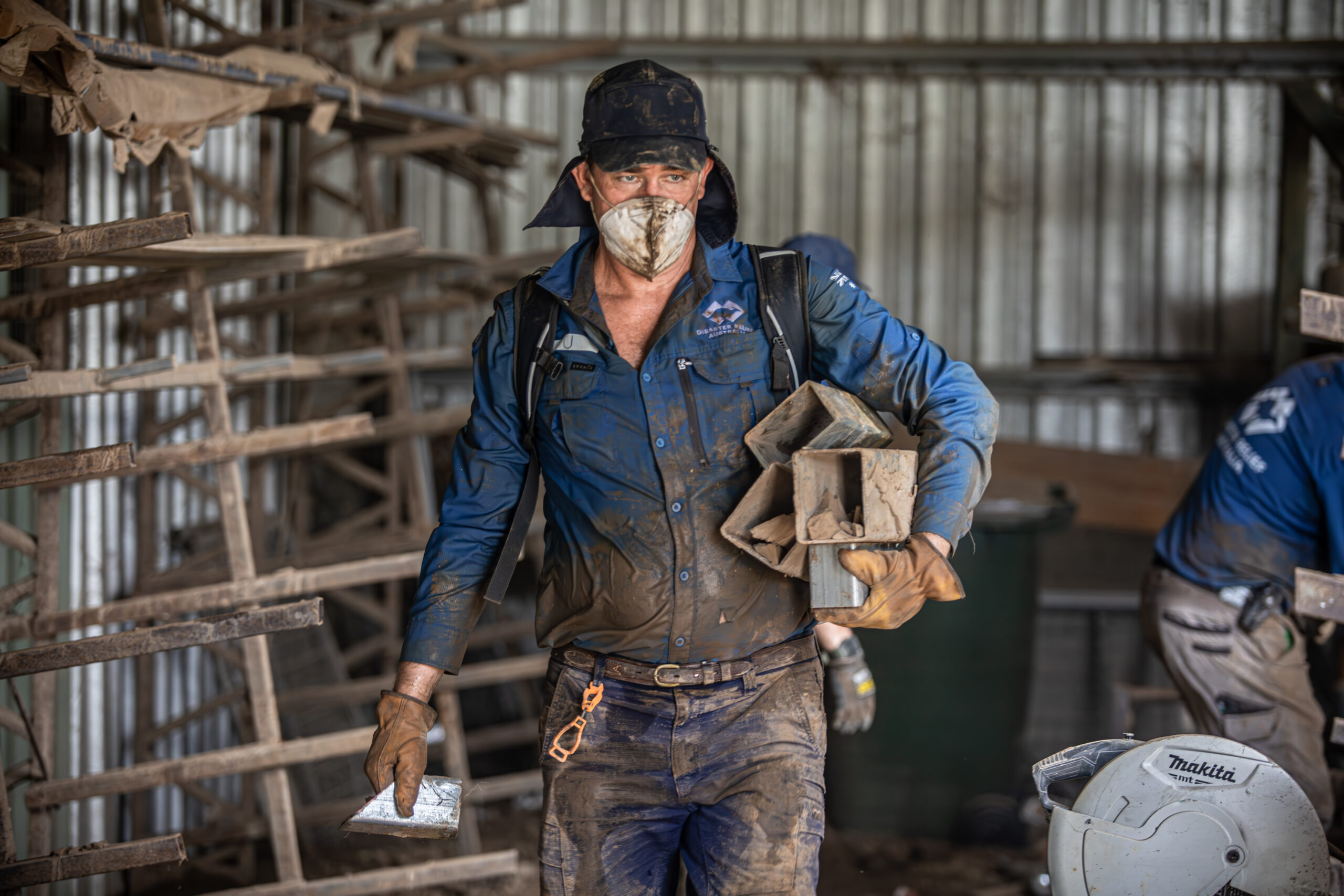
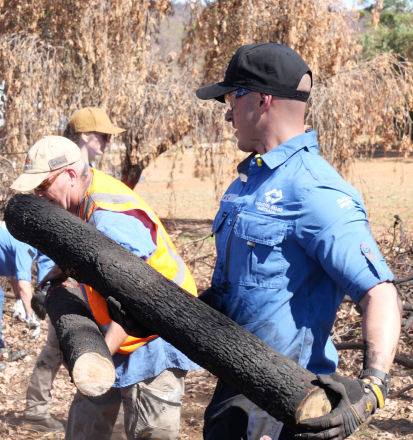
This is our most common new volunteer role. Join the hands-on team clearing debris, managing green waste, or salvaging personal belongings. With training, you can also use a chainsaw or progress to Strike Team Leader (STL).

Camp Manager (CAMPS)
Keep our volunteers nourished by preparing meals during operations and maintaining a clean, well-organised Forward Operating Base (FOB).

Damage Assessors
Be the first point of contact with community members, gathering key details to help plan the work such as job length, required tools, and the number of volunteers needed. You will hear people’s stories and let them know how we can help.

Public Relations Officer (PRO)
Capture photos, stories and testimonials from volunteers and the community to help share our mission and impact. The PRO is also a Strike Team member.

Planning Officer (PLANS)
Help get jobs started by calling community members and scheduling in Damage Assessment Teams to visit. You will log information gathered ready for the Operations Officer to allocate it to a Strike Team.

Operations Officer (OPSO)
Allocate work teams to community requests for assistance and ensure all runs smoothly and efficiently. You will review incoming tasks, monitor job progress, and play a key role in keeping the operation productive and coordinated.

Logistics Officer (LOGS)
LOGS keeps the operational side of a deployment organised and well-stocked. Manage inventory levels, coordinate equipment movements and maintain accurate records.

Safety Officer (SO)
The SO contributes to safety procedures and ensures risk awareness and safe work practices are embedded during operations. They review post-action reports to enhance safety protocols.

Wellbeing Officer (WB)
Offer practical and compassionate support to volunteers and community members who may be overwhelmed after a disaster. Ensure they feel heard, safe and connected.

Local Disaster Relief and Recovery Teams
DRA has ten equipped and operational Disaster Relief and Recovery Teams (DRRTs) in all states and territories. Each DRRT is integrated into local, state and national disaster management plans and participate in forums, preparation activities and emergency management exercises.
Training opportunities
Effective disaster response comes from effective training and preparedness.
As a member of our tribe, volunteers are offered a range of training to equip them with valuable skills needed for disaster response, mitigation and recovery.
From chainsaw operations to drone and imagery analysis and incident command systems, our training keeps us at the cutting edge.
Our operations
DRA have built an incredible capability providing unparalleled relief assistance across a full range of global disasters. We are proud of our history and accomplishments and continue to respond to recovery efforts post disaster right across Australia.
FAQs
After a disaster, government agencies, councils, or community organisations may request assistance from Disaster Relief Australia (DRA). Once authorised and coordinated, DRA launches a cleanup and recovery project in the affected area. This is called an operation.
Volunteers are then invited to participate through an Expression of Interest (EOI). If selected, they travel to the operation site to help the community recover, known as a deployment. Participation in deployments is entirely voluntary, and there is no obligation to join an operation.
Before deploying, you’ll need to meet a few basic requirements, such as completing your induction training and having a current tetanus vaccination (within the past 10 years).
Most volunteers deploy in week-long intervals (8 days, 7 nights), which are called waves. If you can’t commit to a full wave, shorter deployments may be possible, especially if you live nearby and can drive yourself to the operation site.
Read inspiring stories from volunteers who’ve helped communities recover on past DRA operations.
DRA welcomes volunteers from all backgrounds and experience levels to contribute to disaster preparedness, relief, and recovery efforts.
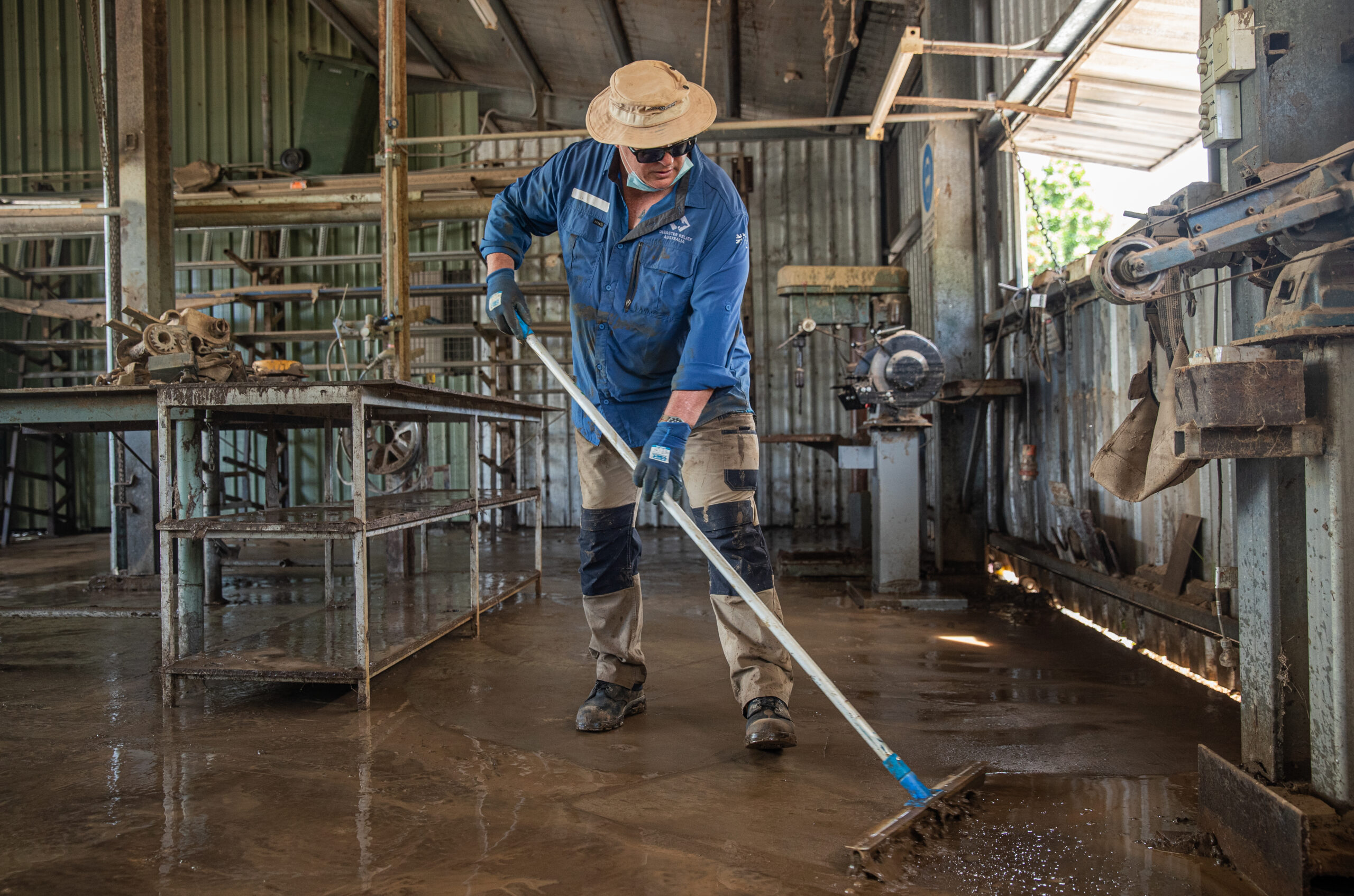
Most new volunteers start out on a Strike Team, helping to recover belongings, remove debris, or clean flood-damaged properties. You’ll be supported by an experienced Strike Team Leader and Incident Management Team every step of the way.
Many other roles are available, and DRA offers a variety of online and in-person training courses so you can learn new skills and take on different opportunities.
Deployments can be both physically and emotionally demanding. Field activities often include standing, walking, bending, cleaning, and clearing debris – sometimes in tough weather or challenging environments. Volunteers are encouraged to take breaks as needed and only take on tasks within their physical capabilities.
If you have an existing injury or health concern, deploying may not be suitable, but there are other volunteer roles you can explore that don’t involve field work. Your health and wellbeing should always come first.
DRA operations can take place anywhere in Australia where a disaster has occurred. If you deploy on an operation, DRA covers the costs of:
- Flights
- Accommodation
- Meals
- Personal protective equipment (PPE)
- A DRA work shirt
You’ll also be reimbursed for travel to and from airports, kilometre allowances for self-drivers, and parking fees (all with valid receipts).
Not covered: personal items on your packing list and safety boots.
Meals are prepared by DRA volunteers and usually include:
- Hot and cold breakfast options
- Morning and afternoon tea
- A packed lunch for the field
- Hot dinner
- All beverages
Dietary needs can all be accommodated – just let the Mobilisation Team know once your place on an operation is confirmed. If you enjoy cooking, you might consider volunteering as a Camp Manager.
Accommodation varies depending on the operation and local facilities. It always includes hot showers, toilets, and a kitchen. In line with DRA’s military heritage, sleeping is usually mixed-gender “barracks-style” with rows of stretchers set up in a community hall. Stretchers are provided, but you’ll bring your own sleeping bag and pillow. Other times, accommodation may be in motels, scout halls, or similar facilities.
To qualify for deployment, you’ll need:
- A tetanus vaccination within the last 10 years (DRA recommends every 5 years).
- A National Police Check
- Completion of the Core Operations online induction training.
- Agreement to DRA’s policies.
- A completed volunteer profile on our online platform, Muster.
DRA also offers free training opportunities both online and in person to help you gain new skills and prepare for different volunteer roles. You can also start by volunteering on local one or two-day projects to gain experience before joining a national operation.
Yes. DRA volunteers are covered under our Voluntary Workers’ Personal Accident Policy. While your first source of cover for injury is Medicare or the Department of Veterans’ Affairs (if applicable), additional expenses not covered may be eligible to claim through DRA’s Voluntary Workers’ Personal Accident Policy.
Because volunteers are not employees, workers compensation does not apply.
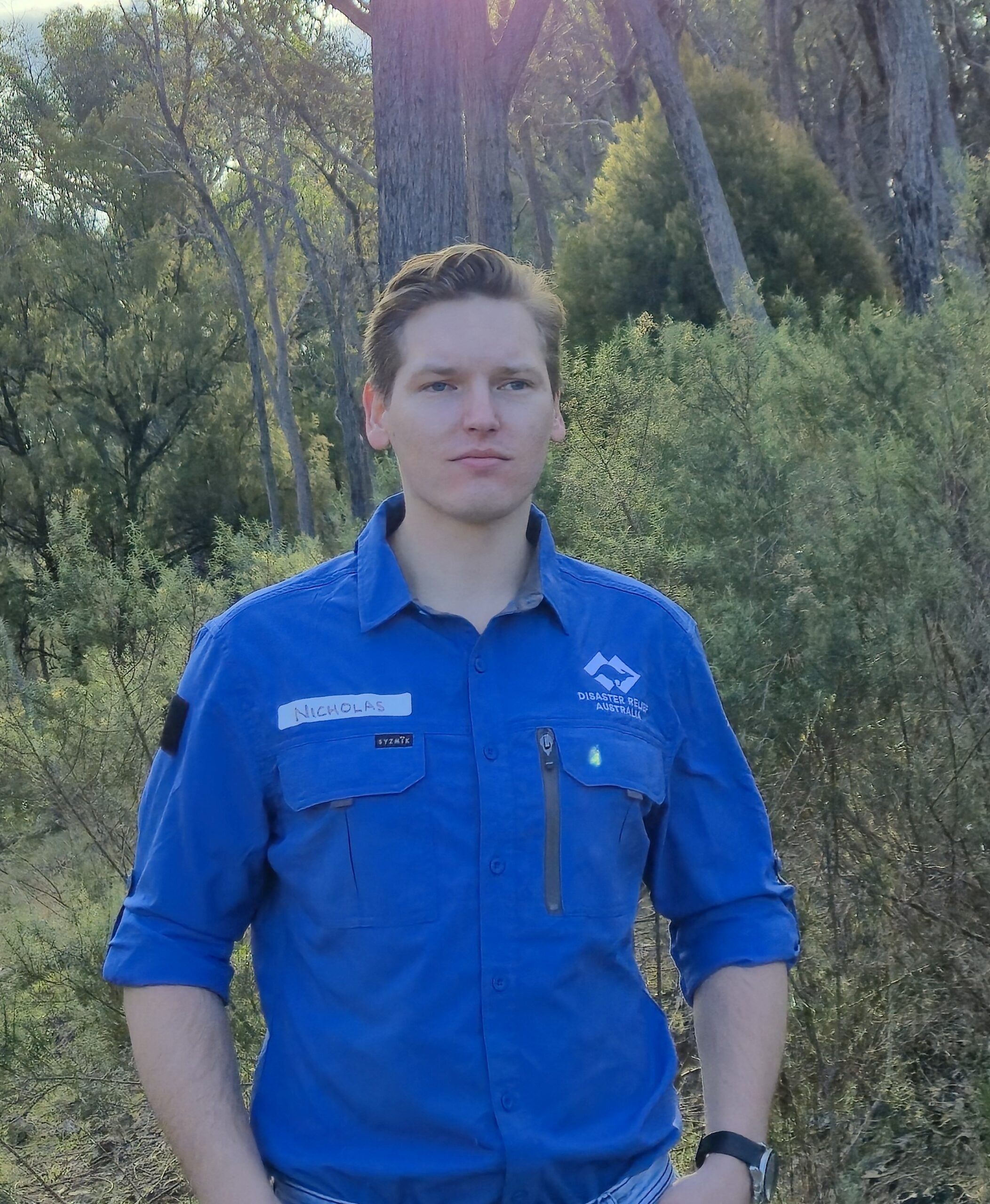
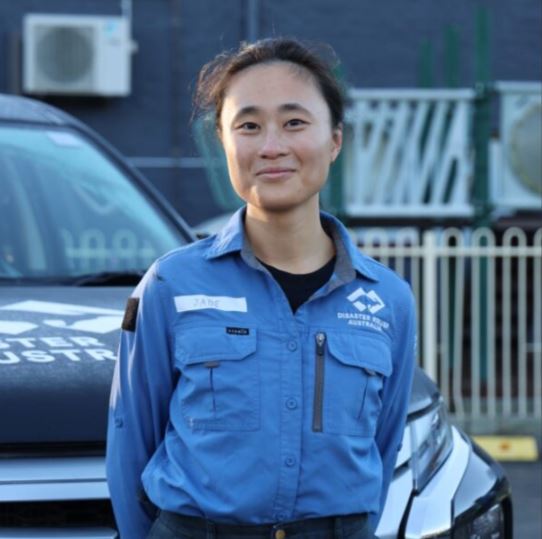
Jade Read their storyI first found out about DRA at a volunteer expo showcasing charities and organisations looking for volunteers in Canberra; I had been looking for something to do with my time and I wanted to give back to the community.
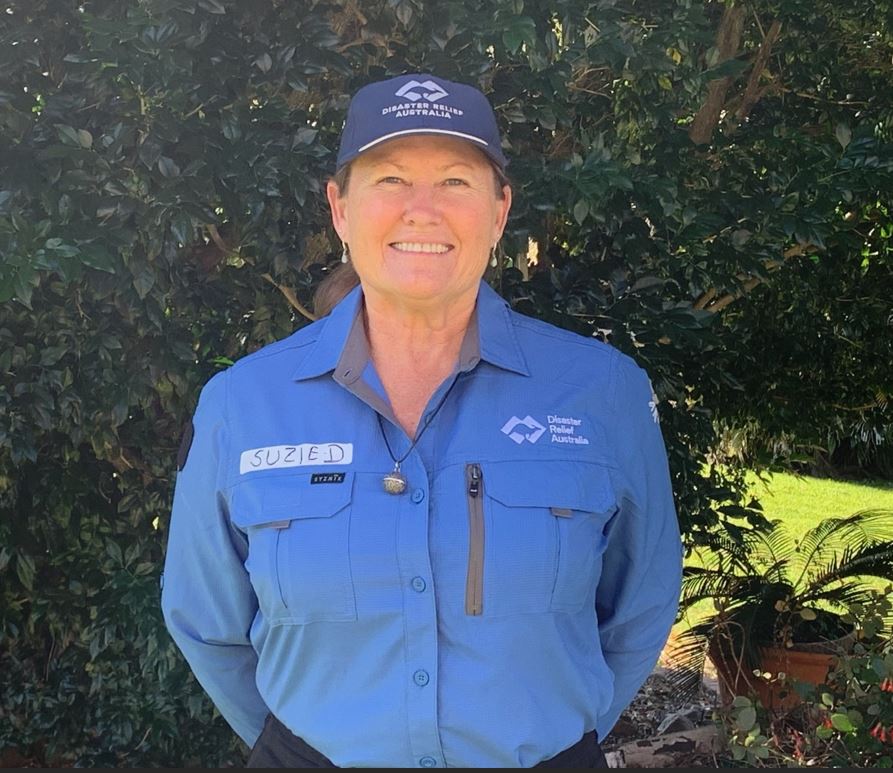
Suzy Read their storyG’day, I’m Suzy and I’m from Brisbane. I have been a DRA volunteer since 2022 and have deployed on 7 waves across 4 different Operations in different roles as well as supporting back of house, such as events and marketing.
Ready to become a volunteer?
Whether or not you’ve served in uniform, come join us keep communities safe, get residents back into their homes and help people rebuild their lives. With Disaster Relief and Recovery Teams in every state and territory, you can volunteer in your local area or express an interest to deploy on national and international operations.
Already on the team?
Planning for upcoming operational deployments is now underway. If you are keen to participate or find out more, express your interest today.